Choosing reliable bone screws is a clinical and supply-chain decision, not a simple price comparison. Global buyers must examine thread design, alloy quality, surface finish, sterility controls, and documentation. A screw may look precise under bright factory lighting, yet its performance depends on manufacturing consistency and surgical compatibility.
Dr. Stephan Perren, a respected orthopedic trauma researcher, emphasized, “The implant should serve the biology of healing, not replace it.” This principle remains practical today. Manufacturers should explain how their bone screws support stable fixation while limiting unnecessary tissue damage. Buyers should also review fatigue testing, dimensional tolerances, packaging integrity, and traceability records. Small details matter.
Quality comes first.
Leading suppliers usually demonstrate experience across trauma, spinal, maxillofacial, and orthopedic applications. However, no manufacturer fits every market. A company with strong production capacity may offer limited surgeon training. Another supplier may provide excellent customization but lack dependable international logistics. These differences deserve careful review.
This guide compares top bone screws manufacturers for global buyers. It considers product breadth, engineering capability, regulatory readiness, quality systems, and after-sales support. The assessment is not perfect, because public information can be incomplete or uneven. Buyers should verify certificates, technical files, and clinical claims independently before making decisions. A polished catalog is not proof of reliable performance. Real confidence comes from consistent evidence, transparent communication, and repeatable manufacturing results.
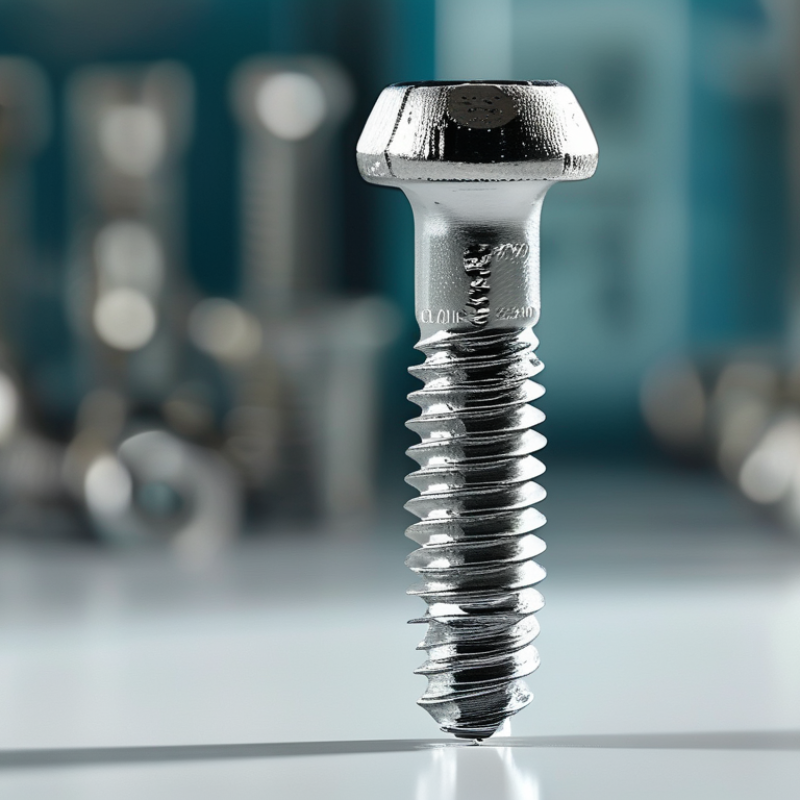
Bone screws are selected according to bone quality, fracture pattern, and surgical technique.
Cortical screws have finer threads for dense bone, while cancellous screws use deeper threads for softer metaphyseal bone. Locking screws connect with a plate and create a fixed-angle construct. Cannulated screws guide placement over a wire, improving accuracy in narrow anatomical areas. Lag screws compress fracture fragments when the near cortex is prepared correctly.
Common materials include stainless steel, titanium alloy, and selected bioabsorbable polymers.
Stainless steel offers strength and consistent manufacturing performance. Titanium is lighter and generally produces fewer imaging artifacts. However, material choice affects stiffness, magnetic resonance considerations, and possible removal procedures. Bioabsorbable options may reduce later extraction, but their degradation behavior requires careful clinical evaluation.
No material is perfect.
Clinical applications range from ankle fixation and wrist fractures to spinal, maxillofacial, and dental procedures.
Thread length must match the intended purchase without damaging opposite tissues. Surgeons also assess screw diameter, head design, insertion torque, and compatibility with the plate system. In practice, a screw that looks suitable in a catalog may be unsuitable for fragile bone.
That is easy to miss.
Global buyers should review fatigue testing, dimensional tolerances, sterilization records, traceability, and applicable regulatory documentation. Clear surgical instructions matter too. Packaging quality matters. Even experienced teams can overlook small differences in thread geometry, so independent technical review remains valuable before procurement.
Evaluating bone screw manufacturers requires more than comparing prices or catalog sizes. Global buyers should examine quality systems, technical evidence, and production consistency. Ask for ISO 13485 certification, material certificates, sterilization records, and batch traceability. Confirm that drawings match the delivered product. A reliable manufacturer should explain thread design, alloy selection, surface treatment, and mechanical testing clearly.
Request samples from different production lots. Inspect thread sharpness, head geometry, packaging seals, and labeling accuracy. Review testing methods, acceptance criteria, and nonconformance records. Verify registrations required in each target market. Factory audits can reveal details that documents miss, such as poorly controlled storage or unclear inspection areas. Communication also matters. Delayed answers may become delayed shipments.
Tips: Build a scorecard covering quality, documentation, capacity, delivery, and technical support. Require corrective-action responses in writing. Compare total procurement cost, not only unit price. Ask about minimum order quantities and emergency replacement procedures. A polished website proves little. No scorecard is perfect. Recheck critical evidence before signing a long-term agreement. Manufacturers with experienced engineers, stable operators, and transparent records usually offer stronger procurement confidence, but buyers should still validate every important claim independently.
Leading Bone Screw Manufacturers by Product Range and Expertise
Global buyers should assess bone screw manufacturers by clinical coverage, not catalog size. A capable supplier may offer cortical, cancellous, locking, cannulated, and headless compression screws. Titanium alloy and stainless steel options should match the intended anatomy and fixation method. According to MarketsandMarkets’ 2024 Orthopedic Implants Market report, the sector is projected to grow from approximately USD 58 billion in 2024 to more than USD 80 billion by 2029. This growth increases supplier choice, but it also makes technical screening harder.
Look for manufacturers with documented experience in trauma, spinal, dental, or sports-medicine applications. Product range matters. So does manufacturing depth. Review material certificates, dimensional inspection records, fatigue testing, sterilization validation, and traceability from raw bar to finished screw. ASTM F543 provides recognized testing guidance for metallic bone screws, while ISO 13485 supports quality-management expectations for medical-device production. These standards do not replace clinical judgment.
Grand View Research has reported continued demand for orthopedic implants as aging populations and fracture treatments expand. However, market growth alone proves little. A broad catalog can hide weak customization, inconsistent thread geometry, or slow technical support. That assumption can fail. Ask for sample inspection data, packaging specifications, and change-control procedures. In my experience, small details matter: a poorly defined driver interface can delay surgery, while unclear coating data can complicate regulatory review. Reliable manufacturers explain limitations openly, even when the answer is inconvenient.
| Anonymous Manufacturer Profile | Primary Product Range | Common Screw Materials | Thread and Fixation Expertise | Typical Surgical Applications | Relevant Quality and Regulatory Expectations | Best Fit for Global Buyers |
|---|---|---|---|---|---|---|
| Trauma Fixation Specialist | Cortical screws Cancellous screws Locking screws Headless compression screws | Implant-grade stainless steel and titanium alloys are commonly used for internal fixation devices. | Fine-pitch cortical threads, wider cancellous threads, variable-pitch compression designs, and locking screw interfaces. | Small-fragment and large-fragment trauma systems, fracture plates, lag fixation, and osteotomy procedures. | Manufacturing controls commonly aligned with ISO 13485; biocompatibility evaluation generally follows ISO 10993 principles; applicable markets may require formal medical-device registration. | Buyers seeking a broad trauma portfolio and compatibility with plate-based fixation systems. |
| Maxillofacial and Dental Fixation Specialist | Micro screws Mini screws Reconstruction screws Self-drilling screws | Commercially pure titanium and titanium alloys are widely selected where lightweight construction and corrosion resistance are required. | Small diameters, low-profile heads, self-tapping tips, and designs intended to reduce soft-tissue irritation. | Facial fracture repair, cranial reconstruction, mandibular fixation, and selected dental or orthodontic procedures. | Dimensional inspection, surface-finish control, clean manufacturing, packaging validation, and market-specific sterilization requirements are key evaluation points. | Global buyers needing compact implants, precise instrumentation, and small-bone fixation expertise. |
| Spinal Implant Specialist | Pedicle screws Cortical bone trajectory screws Reduction screws Revision screws | Titanium alloys are frequently used; cobalt-chromium components may be present in selected spinal systems depending on design requirements. | Polyaxial and monoaxial heads, tulip interfaces, variable-angle features, reduction mechanisms, and revision-focused thread designs. | Thoracolumbar and cervical spinal stabilization, deformity correction, degenerative conditions, and revision surgery. | Buyers should verify mechanical testing, fatigue performance, system compatibility, imaging considerations, and regulatory clearance for the intended indication. | Purchasers requiring complete spinal instrumentation rather than standalone screws. |
| Sports Medicine and Small-Joint Specialist | Interference screws Compression screws Suture anchor screws Small-fragment screws | Titanium alloys, stainless steel, and selected bioabsorbable polymers are used across different fixation applications. | Fine threads, cannulated designs, low-profile heads, and fixation concepts intended for ligament, tendon, or small-bone procedures. | Anterior cruciate ligament reconstruction, tendon repair, hand and foot surgery, and small-joint fixation. | Material-specific mechanical testing, absorption or degradation data for bioabsorbable products, and validated delivery instruments are important. | Buyers serving sports-medicine, arthroscopy, and extremity-surgery markets. |
| Orthopedic Oncology and Complex Reconstruction Specialist | Long screws Custom-length screws Revision fixation Augmentation-compatible screws | Implant-grade titanium alloys and stainless steel are used according to the required strength, imaging, and system compatibility criteria. | Extended lengths, high-strength fixation, locking interfaces, variable-angle options, and designs for compromised bone stock. | Complex fracture reconstruction, revision surgery, periprosthetic fixation, and fixation involving reduced bone quality. | Traceability, custom or configurable production controls, mechanical validation, risk management under ISO 14971, and robust post-market surveillance are essential. | Hospitals and distributors requiring specialized sizes and support for difficult cases. |
| High-Volume OEM and Private-Label Manufacturer | Standard screw families Cannulated screws Locking screws Instrument sets | Common offerings include implant-grade stainless steel and titanium alloys, with material certificates supplied for controlled production batches. | Repeatable thread geometry, standardized head profiles, cannulation, color coding, and customer-specific packaging or labeling. | OEM trauma systems, distributor portfolios, hospital tenders, and private-label orthopedic product lines. | Buyers should assess design ownership, technical files, batch traceability, supplier controls, inspection records, packaging validation, and export documentation. | Distributors seeking scalable production, consistent lead times, and configurable branding or packaging without displaying a manufacturer brand in the product matrix. |
| Buyer note: Product availability, dimensions, materials, certifications, sterilization status, and regulatory approvals vary by manufacturer and market. Global purchasers should request current technical drawings, material certificates, quality certificates, regulatory documentation, and product-specific instructions for use before procurement. | ||||||
Top Bone Screws Manufacturers for Global Buyers?
Quality begins with controlled manufacturing, not attractive catalogs. Grand View Research’s 2024 orthopedic implants report estimates the global market reached about US$47.8 billion in 2023. It also projects steady growth through 2030. This demand increases pressure on suppliers to prove consistency. Buyers should check ISO 13485 certification, material certificates, and lot-level traceability. Titanium alloy screws need verified chemical composition and mechanical testing. ASTM F543 covers important requirements for metallic bone screws. Manufacturing capability should include CNC machining, thread inspection, surface finishing, cleaning, and validated sterile packaging.
Regulatory compliance must match the destination market. In the United States, many bone screws require FDA 510(k) clearance and quality controls under the QMSR, effective in 2026. European sales require conformity with Regulation (EU) 2017/745, technical documentation, risk management, and post-market surveillance. ISO 10993 biological evaluation can support material safety decisions. A certificate alone is not enough. The uncomfortable truth is that audit documents may look complete while process controls remain weak. Ask for recent inspection records, nonconformance trends, corrective actions, and sterilization validation. Small gaps can become serious clinical risks.
Tips: Request three recent production lots. Compare dimensions, hardness, packaging seals, and test results. Confirm whether inspections occur in-house or through subcontractors. Review change-control procedures before signing a long-term agreement. A supplier that explains limitations clearly may be more reliable than one promising perfection.
International purchasing of bone screws begins with more than a unit price. Buyers should verify material grade, thread design, diameter ranges, and intended anatomy. Product drawings, inspection reports, and lot traceability should match the quoted specification. Small discrepancies matter. A screw may fit a catalog description yet fail a surgeon’s practical preference. Clinical teams should review handling, insertion instruments, and compatibility with existing systems. Destination-country registration requirements also need early attention.
Supply-chain planning needs evidence, not optimistic promises. Ask about production capacity, critical subcontractors, sterilization validation, packaging integrity, and batch-release controls. Confirm lead times during normal demand and material shortages. Separate manufacturing time from transit, customs, and local registration time. That distinction prevents painful surprises. Some buyers focus heavily on freight cost, then discover incomplete documents delay clearance. Request a controlled document set, including applicable quality certifications, technical files, labeling samples, and change-notification procedures. Requirements vary by destination.
Reliable purchasing also depends on supplier qualification. Review quality-system certification, audit findings, complaint handling, and corrective-action records. Independent testing may support checks for dimensions, mechanical performance, corrosion resistance, or packaging. Do not treat attractive samples as proof of stable production. Pilot orders can reveal inconsistent labeling or slow communication. That is useful, though not comfortable. Contract terms should define acceptance criteria, forecast flexibility, nonconforming-product handling, and regulatory-update responsibilities. A spreadsheet can look complete and still hide a weak assumption. Teams should record unresolved questions before approving the purchase.
Material selection is a practical purchasing factor because density affects freight weight, packaging requirements, and handling across international supply chains.
Titanium alloy Ti-6Al-4V is substantially lighter than 316L stainless steel, while PEEK has the lowest density among these commonly used orthopedic fixation materials. Global buyers should evaluate material specifications together with ISO 13485 quality systems, sterilization validation, traceability, regulatory documentation, packaging integrity, and delivery reliability.
Reference values: typical room-temperature densities reported in engineering material databases and technical data sheets: Ti-6Al-4V approximately 4.43 g/cm³, 316L stainless steel approximately 7.99 g/cm³, and PEEK approximately 1.30 g/cm³. Exact values vary by grade, processing, and formulation.