Choosing the right orthopedic implants is not a simple matter of selecting the newest device. It requires careful clinical judgment, reliable evidence, and a clear understanding of the patient’s daily needs. Age, bone quality, activity level, anatomy, allergies, and expected recovery all influence the decision. A runner may need different considerations than an older adult with fragile bone. The details matter.
Sir John Charnley, a pioneer in joint replacement, emphasized the central purpose of treatment: “The aim is to relieve pain and restore function.” His principle remains relevant. An implant should support safe movement, durable fixation, and a realistic quality of life. Brand reputation alone cannot guarantee success. Surgeons must examine implant design, bearing materials, surgical technique, published outcomes, and long-term registry data. They should also discuss risks openly, including infection, loosening, fracture, wear, and possible revision surgery.
No implant is perfect. Even experienced teams can misjudge a patient’s future activity or bone response. That uncertainty deserves honest discussion. A well-chosen implant must fit the individual, not merely the operating room’s routine. Patients should ask why a specific device is recommended, how long it may last, and what alternatives exist. This guide explores those questions in practical terms. It connects expert knowledge with real clinical decisions, from preoperative imaging to postoperative monitoring. The goal is not to promise a flawless result. It is to support a careful, evidence-informed choice that respects both medical realities and the patient’s expectations.
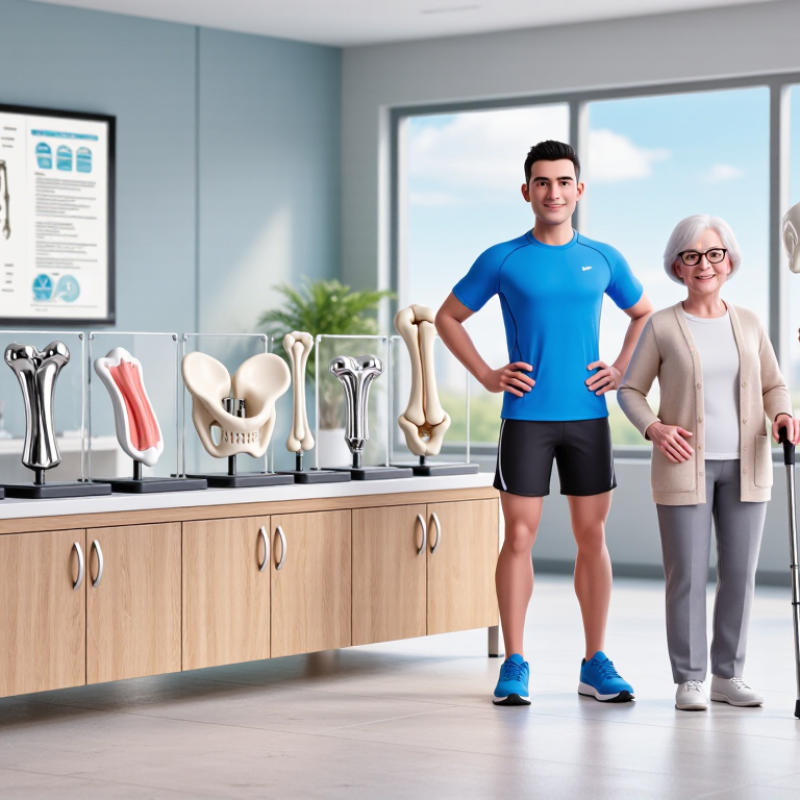
Choosing an orthopedic implant should begin with the patient, not the implant catalogue. The World Health Organization reports that musculoskeletal conditions affect about 1.71 billion people worldwide. Yet the number alone cannot define treatment. A 68-year-old patient may value pain-free gardening, while a younger worker may need stable lifting and climbing. These goals must be discussed clearly before imaging and implant selection.
A practical assessment includes pain location, movement limits, bone quality, activity level, allergies, comorbidities, and expected recovery time. The Global Burden of Disease Study 2021 estimated that 595 million people lived with osteoarthritis in 2020, with numbers projected to reach nearly 1 billion by 2050. This growing demand makes careful patient selection more important, not less. Surgeons should also explain fixation methods, bearing surfaces, possible restrictions, and revision pathways in plain language. Small details matter. A patient who cannot kneel may judge success differently from someone returning to sport.
Registry evidence can support, but never replace, clinical judgment. The 2024 American Joint Replacement Registry Annual Report includes more than 3.5 million hip and knee procedure records, helping specialists examine revision patterns across large populations. However, registry averages may not predict one patient’s result. That is where decisions can become imperfect. Bone density may be uncertain, goals may change, and recovery is not fully controllable. A documented discussion of trade-offs, realistic function, and the patient’s own priorities creates a more reliable basis for implant choice.
Choosing an orthopedic implant starts with the patient, not a catalog. Surgeons compare titanium alloys, cobalt-chromium alloys, ceramics, and high-performance polymers according to anatomy, load, allergy history, and expected activity. Titanium is light and bone-friendly, while cobalt-chromium offers strong wear resistance. Ceramic surfaces can reduce friction, but brittleness remains a concern. Polymeric liners may improve motion, yet wear patterns need long-term review. Materials behave differently in the body.
Design affects more than appearance. A porous surface can encourage bone ingrowth, especially when primary fixation is difficult. Cemented designs may provide immediate stability in selected patients. Uncemented implants depend on bone quality and accurate preparation. Fit matters. Modular components allow adjustment of leg length, offset, or alignment, but every junction adds another interface to assess. Functional features such as constrained motion, mobile bearings, or anatomic geometry should match measured instability, range-of-motion needs, and soft-tissue balance. More flexibility is not always better.
Reliable selection uses peer-reviewed evidence, regulatory documentation, imaging, and the surgeon’s direct examination. Ask how the implant performed beyond the first year, not only during early recovery. Small differences in stiffness can influence stress shielding, while surface texture may affect fixation. No checklist is perfect. Patient expectations can also be unrealistic. A careful discussion should include revision options, rehabilitation demands, and uncertainty. I would reconsider any choice based mainly on marketing language or a single favorable study.
How to Choose the Right Orthopedic Implants?
Evaluate Implant Compatibility, Safety, and Expected Durability
Choosing an orthopedic implant starts with fit, but compatibility involves more than size. The implant must match bone anatomy, surgical technique, imaging needs, and the patient’s activity level. A surgeon should review radiographs, CT findings, bone density, allergies, and previous procedures. Material sensitivity matters. A device that fits one patient may perform poorly in another. Compatibility with instruments and fixation methods also affects operating-room safety. Ask how the implant interacts with future scans, rehabilitation, and possible revision surgery. That question is easy to overlook.
Safety assessment should include documented testing, sterile packaging, traceability, and clear instructions for use. Qualified clinicians should discuss infection, loosening, fracture, nerve injury, and blood-clot risks clearly. No implant is risk-free. Follow-up matters because early pain, swelling, fever, or reduced movement may signal a problem. Evidence from peer-reviewed studies and long-term clinical monitoring is more useful than promotional promises. Regulatory authorization is important, but it does not guarantee identical results for every patient. That is an uncomfortable limitation.
Expected durability depends on body weight, bone quality, alignment, activity, and fixation. A highly active patient may place greater stress on a joint replacement than a less active patient. Published survival estimates come from groups, not individual predictions. Ask about realistic timelines, maintenance, and warning signs requiring review. In my view, the strongest choice balances proven performance with actual patient needs. A careful plan can still change during surgery. That possibility deserves honest discussion.
| Implant Category | Common Materials | Compatibility Evaluation | Key Safety Considerations | Expected Durability | Evidence to Review |
|---|---|---|---|---|---|
| Total Hip Replacement | Titanium or cobalt-chromium alloy stems; ceramic or metal heads; highly cross-linked polyethylene liners | Assess bone quality, hip anatomy, activity level, allergy history, and compatibility of the stem, head, liner, and fixation method | Infection, dislocation, fracture, leg-length difference, loosening, and wear-related complications | Many modern implants function for 15–20 years or longer, but longevity varies with age, activity, alignment, weight, and surgical technique | Long-term registry data, revision rates, wear testing, fixation outcomes, and patient-specific risk assessment |
| Total Knee Replacement | Cobalt-chromium or oxidized zirconium components; titanium components; polyethylene inserts | Match implant geometry, ligament condition, bone stock, deformity, fixation strategy, and range-of-motion requirements | Infection, stiffness, instability, thromboembolic events, neurovascular injury, wear, and aseptic loosening | Commonly expected to last 15–20 years or more; younger or highly active patients may experience greater wear or revision risk | Survivorship studies, revision statistics, polyethylene wear data, alignment accuracy, and functional outcomes |
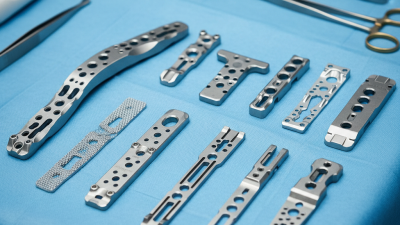
| Trauma Plates and Screws | Stainless steel or titanium alloys; bioabsorbable materials in selected applications | Consider fracture pattern, bone quality, implant profile, screw trajectory, soft-tissue coverage, and load requirements | Infection, nonunion, malunion, screw loosening, plate breakage, soft-tissue irritation, and neurovascular injury | Designed to support healing until the bone unites; the implant may remain permanently or be removed if symptoms or complications occur | Fatigue testing, union rates, failure modes, clinical results for the fracture type, and postoperative imaging |
| Intramedullary Nails | Titanium or stainless steel alloys | Evaluate canal diameter, fracture location, length, alignment, locking options, and the patient’s bone quality | Malalignment, delayed union, nonunion, infection, implant fatigue failure, and pain around locking screws | Usually intended to remain until fracture healing; long-term survival depends mainly on successful union and mechanical loading | Mechanical fatigue data, union rates, reoperation rates, and outcomes for the specific fracture pattern |
| Spinal Fusion Devices | Titanium alloys, cobalt-chromium alloys, polyether ether ketone, and bone graft materials | Assess spinal level, anatomy, bone density, alignment, fusion goals, adjacent-segment risk, and compatibility with graft materials | Nonunion, implant migration, adjacent-segment disease, neurologic injury, infection, and hardware failure | Often designed for permanent implantation; durability depends on solid fusion, construct stability, bone quality, and mechanical loading | Fusion rates, migration data, subsidence measurements, radiographic outcomes, and long-term reoperation rates |
| Shoulder Arthroplasty | Metallic humeral components, polyethylene glenoid components, and ceramic options in selected designs | Match implant type to rotator-cuff function, glenoid bone stock, fracture pattern, instability history, and activity demands | Instability, infection, component loosening, fracture, nerve injury, stiffness, and scapular or glenoid wear | Many implants provide 10–15 years or more of service, although results vary by implant type, patient age, and shoulder function | Survivorship studies, complication rates, patient-reported outcomes, radiographic loosening, and revision data |
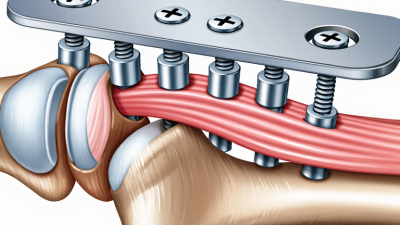
| Bone Screws and Anchors | Titanium alloys, stainless steel, polyether ether ketone, and bioabsorbable polymers | Check thread design, insertion technique, bone density, target tissue, implant size, and whether permanent or absorbable fixation is appropriate | Pullout, breakage, migration, inflammatory response, infection, cartilage or tendon damage, and poor fixation | Permanent devices are intended for long-term fixation; absorbable devices are designed to lose strength gradually over time, depending on material and design | Pullout strength, cyclic loading tests, absorption profile, tissue response, and procedure-specific clinical evidence |
| General Compatibility Checks | Implant material, coatings, fixation components, instruments, and accessory parts | Confirm anatomical fit, material compatibility, component interoperability, prior implants, allergies, bone quality, and intended use | Verify regulatory authorization, sterile packaging, traceability, expiration date, correct size, and absence of recalled components | Review validated fatigue, wear, corrosion, sterilization, and shelf-life testing rather than relying only on marketing claims | Regulatory documentation, instructions for use, independent clinical studies, post-market surveillance, and hospital procurement records |
| MRI and Imaging Compatibility | Varies by alloy, geometry, fixation method, and the complete implant system | Check the exact device documentation and MRI conditions, including field strength, specific absorption rate, and scan duration | Potential heating, movement, induced currents, image artifacts, or restrictions if device-specific conditions are not followed | MRI status does not determine mechanical service life; both imaging conditions and long-term implant performance must be assessed separately | Device labeling, MRI safety testing, imaging artifact data, and confirmation from the treating clinician or radiology team |
Note: Expected durability is influenced by patient age, activity level, body weight, bone quality, diagnosis, surgical technique, implant positioning, rehabilitation, and follow-up care. Final implant selection should be made by a qualified orthopedic professional using patient-specific clinical and imaging data.
Implant selection should begin with the surgical problem, not the device catalogue. Surgeons assess bone quality, alignment, activity level, age, and expected loading. Cemented fixation may offer immediate stability in weaker bone, while press-fit fixation depends on biological bone growth. Surgical technique matters equally. Accurate imaging, balanced soft tissues, and controlled instrument handling can reduce avoidable complications. The World Health Organization’s Safe Surgery guidelines reported that checklist use reduced major complications from 11% to 7% in a multicenter study. Small steps matter.
Risk discussions must be specific. Infection, blood clots, nerve injury, loosening, dislocation, and revision surgery remain possible. The National Joint Registry’s 21st Annual Report (2024) shows that most primary hip and knee replacements maintain high ten-year implant survival, but results vary by procedure, patient factors, and implant design. That difference deserves attention. A surgeon should explain why one fixation method suits the patient, rather than promise a perfect outcome.
Recovery requirements should influence the choice before surgery. Patients may need crutches, wound monitoring, physical therapy, and temporary limits on stairs or lifting. Recovery is rarely linear. Pain can improve before strength returns. The American Academy of Orthopaedic Surgeons emphasizes progressive rehabilitation and early movement when clinically appropriate. In practice, missed exercises, poor nutrition, or unrealistic work demands can slow progress. I would also question any plan that ignores home support, transportation, or warning signs. A technically successful operation still needs a workable recovery plan.
Choosing an orthopedic implant should begin with your care team, not a product catalogue. Your surgeon reviews bone quality, joint damage, age, activity, allergies, and revision risks. A radiologist may clarify imaging findings. A physiotherapist can explain recovery demands.
The National Joint Registry’s 21st Annual Report recorded more than 230,000 primary hip and knee replacements in England, Wales, and Northern Ireland during 2023. That scale shows how common these decisions are, but every patient remains different. Implant fixation, material, size, and surgical approach can affect stability and movement. Evidence from the American Joint Replacement Registry also supports tracking outcomes over time, including revisions and patient-reported function. Ask how the proposed implant performs in patients with similar needs. Long-term evidence matters more than confident advertising. I would not choose only by promised durability.
Tips: Bring a complete medication and allergy list. Ask which implant options fit your anatomy. Request plain-language revision-rate data. Confirm who manages complications after surgery. Ask about walking aids, driving, work, and realistic pain milestones. A second opinion may reveal an important concern, or simply confirm the plan. Both outcomes are useful.
Your care team should explain uncertainty openly. No implant guarantees perfect movement or permanent success. Discuss infection, loosening, fractures, blood clots, nerve symptoms, and possible revision surgery. Shared decisions work best when you describe your daily goals clearly, such as climbing stairs, kneeling, or returning to cycling. Record the answers, because surgical appointments can feel rushed.