China Top Implant Surgical Instruments Suppliers? This question deserves more than a catalog-based answer. The right supplier must combine manufacturing experience, clinical understanding, and dependable quality control. Implant surgical instruments should feel balanced in the surgeon’s hand. Their tips should remain precise after repeated sterilization. Their surfaces should resist corrosion during daily clinical use.
Professor Per-Ingvar Brånemark, a pioneer of modern implant dentistry, said, “The body is not a machine; it is a living organism.” His observation remains highly relevant when evaluating Chinese manufacturers. A supplier may offer titanium forceps, implant drivers, osteotomes, depth gauges, and guided-surgery kits. Yet product variety alone proves little. Buyers should examine material certificates, dimensional tolerances, sterilization instructions, traceability systems, and ISO 13485 quality processes. Small details matter. A loose driver connection can affect confidence during placement.
This overview will assess leading Chinese suppliers through practical criteria, including product consistency, customization, export experience, technical support, and after-sales reliability. Factory audits, sample testing, and communication records can reveal more than promotional claims. However, no ranking is permanently objective. Market information changes, and some capable smaller manufacturers receive limited international exposure. That limitation deserves honesty. A polished website is not evidence of clinical performance. Independent verification remains necessary before purchasing implant surgical instruments for professional use. The strongest supplier is not always the largest one. It is the partner that repeatedly delivers accurate instruments, clear documentation, and responsive support when real procedures become demanding.
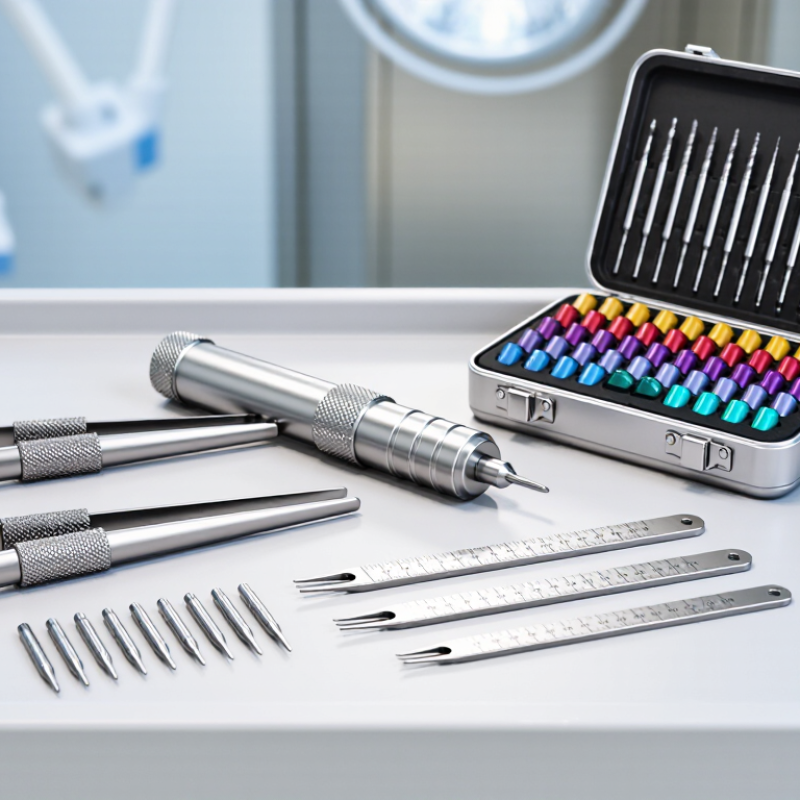
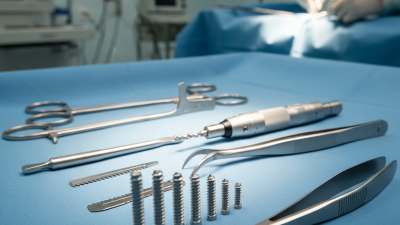
Chinese manufacturers supply a broad range of implant surgical instruments for orthopedic, spinal, dental, and trauma procedures. Common products include bone saws, surgical drills, reamers, tapping tools, screwdrivers, forceps, retractors, and implant insertion handles. Many suppliers also produce trial components, positioning guides, depth gauges, and alignment instruments for checking fit before implantation.
Orthopedic instrument sets often support hip, knee, fracture, and spinal procedures. A typical set may contain rasps, broaches, trial stems, guide wires, reduction tools, and calibrated measuring devices. Spinal systems may include rod benders, screwdrivers, awls, distractors, and temporary fixation tools.
Manufacturers usually offer stainless steel or titanium options, with laser markings for size identification. Small details matter. Clear markings can reduce confusion on a crowded operating table.
Quality depends on more than appearance. Buyers should review material certificates, dimensional inspection records, surface finishing, cleaning instructions, and sterilization compatibility. Chinese factories may provide custom trays, procedure-specific kits, and instruments matched to supplied implants. However, a large catalog does not prove consistent performance. I have seen purchasing decisions focus too heavily on price and overlook handle balance, jaw alignment, or repeated-use durability. Samples, usability testing, traceability documents, and independent quality audits provide stronger evidence. Every instrument still requires verification against applicable medical-device regulations and the surgeon’s actual workflow.
China Top Implant Surgical Instruments Suppliers?
Key Criteria for Evaluating Chinese Implant Instrument Suppliers
Choosing an implant instrument supplier requires more than comparing prices. Start with material certificates, dimensional reports, and documented manufacturing controls. Stainless steel grades should match the instrument’s intended surgical use. Check surface finish under strong light. Tiny scratches can affect cleaning and handling.
Ask for production samples before signing a large order. Measure jaw alignment, hinge movement, and tip consistency. Request batch records and traceability details. A capable factory should explain inspection points clearly. Evidence matters more than polished presentations. I once found a competitively priced sample with a rough hinge. It worked, but repeated movement felt uneven. That small defect changed the evaluation.
Supplier reliability also depends on quality systems, regulatory documentation, and communication. Confirm relevant certifications through current, verifiable records. Review sterilization compatibility and packaging controls when applicable. Inspect the factory, or arrange an independent audit. Speak with technical staff, not only sales representatives. Response time reveals practical support. Lead times, replacement policies, and corrective-action procedures should be written clearly. Cost still matters. However, a lower quotation may hide inconsistent tolerances or weak inspection coverage. Do not assume one successful sample proves stable production. Evaluate several batches. Leave room for doubt.
| Evaluation Dimension | What to Evaluate | Relevant Standards or Evidence | Recommended Benchmark | Suggested Weight | Priority |
|---|---|---|---|---|---|
| Regulatory Compliance | Confirm that the supplier has the appropriate manufacturing and quality documentation for reusable or sterile implant surgical instruments. | Valid quality-management certificate, applicable product registrations, technical files, declarations of conformity, and traceable production records. | Documentation is current, product-specific, and consistent with the destination market requirements. | 20% | High |
| Material Selection | Assess the grade, corrosion resistance, hardness, biocompatibility, and surface condition of stainless steel, titanium, or other materials used. | Material certificates, mill certificates, chemical-composition reports, hardness records, and corrosion-resistance test reports. | Materials are identified by recognized grades and supported by batch-level documentation. | 15% | High |
| Dimensional Accuracy | Evaluate the precision of interfaces, cutting edges, drill guides, drivers, handles, locking features, and other functional surfaces. | Approved drawings, inspection plans, calibrated measurement equipment, first-article inspection, and in-process inspection records. | Critical dimensions are controlled according to approved drawings and validated tolerances. | 15% | High |
| Functional Performance | Verify torque transmission, fit, alignment, gripping strength, cutting performance, fatigue resistance, and compatibility with the intended implant system. | Functional test protocols, torque testing, cyclic testing, dimensional fit checks, and sample evaluation by qualified users. | Samples perform consistently under simulated clinical use without deformation, excessive play, or premature wear. | 15% | High |
| Surface Finish and Cleanability | Inspect polishing, passivation, electropolishing, edge quality, burr removal, crevices, and areas that may retain biological residue. | Surface-finish specifications, passivation records, visual inspection, roughness measurements where applicable, and cleaning validation information. | Surfaces are smooth, free from visible burrs and corrosion, and suitable for validated cleaning and sterilization processes. | 10% | High |
| Manufacturing Capability | Review machining, forging, laser marking, heat treatment, polishing, assembly, packaging, and inspection capabilities. | Process flow charts, equipment lists, preventive-maintenance records, operator qualifications, and production-capacity information. | Critical processes are performed under controlled conditions with documented inspection checkpoints. | 10% | Medium |
| Traceability | Determine whether raw materials, work orders, inspections, rework, packaging, and shipments can be traced to a defined production batch. | Lot or batch numbers, inspection records, material certificates, barcode systems, and retention of quality records. | Each shipment can be linked to production and inspection records through a documented traceability system. | 8% | High |
| Packaging and Sterilization Compatibility | Assess protection against damage, contamination, moisture, and corrosion during storage, transport, cleaning, and sterilization. | Packaging specifications, sterilization compatibility data, labeling controls, transport simulation where applicable, and shelf-life evidence. | Packaging protects instrument functionality and remains compatible with the purchaser’s validated reprocessing method. | 5% | Medium |
| Customization and Engineering Support | Evaluate the supplier’s ability to work from technical drawings, surgeon feedback, implant-system interfaces, prototypes, and design revisions. | Non-disclosure agreement process, drawing-control procedure, prototype records, design-review documents, and change-control history. | Technical changes are documented, reviewed, approved, and reflected in controlled production drawings. | 5% | Medium |
| Quality Consistency | Review nonconformance rates, corrective and preventive actions, customer complaint handling, and repeatability between production batches. | Internal audit records, CAPA reports, complaint logs, statistical process-control data, and supplier-performance reviews. | Quality issues are investigated using documented root-cause analysis and corrective actions are verified for effectiveness. | 5% | High |
| Lead Time and Supply Reliability | Measure quotation response, sample development, production scheduling, on-time delivery, and ability to maintain continuity of supply. | Historical delivery records, production schedules, capacity plans, raw-material controls, and documented business-continuity measures. | Lead times are clearly defined, communicated before order confirmation, and supported by realistic capacity planning. | 4% | Medium |
| Commercial Transparency | Compare total cost rather than unit price alone, including tooling, testing, packaging, documentation, freight, and change-management costs. | Detailed quotations, payment terms, tooling ownership terms, warranty conditions, inspection terms, and change-notification requirements. | All recurring and one-time costs are itemized, with no unexplained charges or uncontrolled substitutions. | 3% | Low |
Scoring method: Rate each dimension from 1 to 5, multiply the rating by the suggested weight, and verify critical claims through documents, samples, audits, and functional testing.
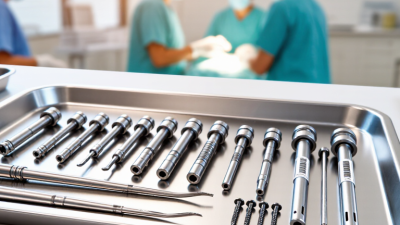
China-based implant surgical instrument suppliers serve hospitals, dental clinics, and medical distributors worldwide. Leading suppliers usually provide implant drills, depth gauges, torque wrenches, bone expanders, and sterilization trays. Their value depends on more than product variety. Experienced manufacturers should show material certificates, dimensional inspection records, and traceable batch numbers. They should also explain how instruments perform after repeated cleaning and sterilization.
A reliable supplier normally supports design verification, sample testing, and controlled production. Ask for details about stainless steel grade, surface treatment, hardness, and corrosion resistance. Request drawings with tolerances, not only attractive product photos. During evaluation, inspect drill edges under magnification and check whether instruments fit their matching systems smoothly. Communication matters too. Clear replies about lead times, packaging, and replacement procedures indicate stronger technical discipline. Still, no supplier is perfect. A polished catalog can hide weak documentation, and even a good sample may not represent every production batch.
Tips: Compare at least three China-based suppliers. Review certificates directly. Test samples before volume orders. Confirm cleaning instructions and packaging integrity. Keep written records of every specification, revision, and inspection result. Small details matter.
Material selection is a practical factor when evaluating implant surgical instrument suppliers. 316L and 304 stainless steel offer high density, corrosion resistance, and sterilization durability, while Ti-6Al-4V titanium provides a substantially lower weight for selected instruments. Density values are standard material properties expressed in g/cm³.
Choosing an implant surgical instrument supplier requires more than comparing prices. The supplier should demonstrate a controlled quality system, usually aligned with ISO 13485. This standard supports documented design, production, inspection, and corrective-action processes. Ask for current certificates, their scope, and the issuing body. A certificate without matching product coverage can create false confidence.
Material control is equally important. Request stainless steel or titanium specifications, heat-treatment records, and corrosion-resistance test results. Each batch should connect to a traceable lot number. For instruments supplied sterile, review sterilization validation, packaging integrity tests, and shelf-life evidence. Non-sterile products still need clear cleaning and reprocessing instructions. Small details matter, especially around hinges, cutting edges, and implant-contact surfaces.
Regulatory expectations vary by destination market. Suppliers may need risk-management files based on ISO 14971, usability records, and technical documentation for applicable device classifications. Independent laboratory reports can strengthen credibility, but they do not replace factory audits. During an audit, inspect calibration labels, environmental controls, incoming inspection areas, and rejected-product storage. I have found that polished documents sometimes hide weak shop-floor discipline. That is an uncomfortable but useful warning. A supplier should also explain complaint handling and post-market monitoring. No system is perfect; transparent correction records are often more reliable than flawless-looking presentations.
Choosing a Chinese supplier for implant surgical instruments requires more than comparing prices. Start by defining materials, dimensions, tolerances, packaging, and intended clinical use. Ask for material certificates, dimensional drawings, and sterilization compatibility data. A dependable manufacturer should explain its quality system, inspection points, and traceability process. Request current ISO 13485 certification and relevant regulatory documents. Do not accept scanned promises alone. Verify certificate scope and issuing details independently.
During evaluation, study samples under realistic conditions. Check jaw alignment, surface finish, hinge movement, and grip comfort. Ask how stainless steel or titanium is sourced and tested. Review batch records, nonconformance handling, and corrective action examples. A technical meeting with quality and engineering staff reveals more than a sales presentation. Keep written specifications for every sample. A good supplier should challenge unclear requirements. That is useful.
Before placing a larger order, use a controlled trial batch. Measure consistency across multiple pieces, not one perfect sample. Confirm packaging, labeling, lead times, change notification, and after-sales response. A small defect can create serious clinical concerns. In supplier reviews, teams often focus on unit cost and overlook rework, inspection time, or delayed delivery. The checklist may still miss something. Leave room for review and correction. Record decisions, test results, and agreed responsibilities before production begins.