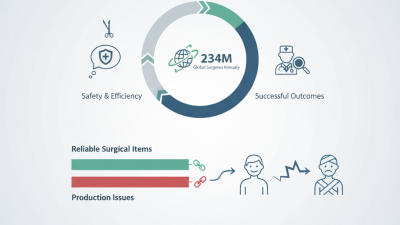
10 Tips for Sourcing Surgical Supplies Globally

Global sourcing can expand access to reliable surgical supplies, competitive pricing, and specialized manufacturing expertise. It can also expose hospitals and distributors to hidden risks. A polished catalog does not guarantee consistent quality. Trust takes evidence.

Experienced procurement teams examine more than unit cost. They review product specifications, sterilization methods, packaging integrity, shelf life, and batch traceability. They confirm whether suppliers follow recognized quality systems and maintain appropriate manufacturing controls. Independent audits, realistic samples, and documented corrective actions provide stronger evidence than promotional claims.

International purchasing also requires careful attention to regulatory duties. Requirements may differ across destination markets, including registration, labeling, import documentation, and post-market reporting. A supplier should clearly identify the legal manufacturer, authorized representatives, and applicable conformity records. These checks help prevent delays at customs and reduce patient-safety concerns.

Yet no sourcing plan is flawless. Samples may perform well while later shipments vary. Communication can fail across time zones, languages, and technical terminology. Even experienced buyers sometimes focus too heavily on price. That mistake deserves honest reflection.

The following ten tips offer a practical framework for evaluating suppliers, verifying quality, managing logistics, and protecting continuity of care. They emphasize transparent documentation, measurable performance, and responsible relationships. When uncertainty remains, pause and investigate. Reliable surgical supplies are not simply purchased; they are qualified, monitored, and continuously reassessed.

10 Tips for Sourcing Surgical Supplies Globally

Define Surgical Supply Requirements and Quality Standards

Define Surgical Supply Requirements and Quality Standards

Global surgical sourcing starts with a precise clinical need, not a broad product label. Specify procedure type, material, dimensions, sterility level, packaging, shelf life, and storage conditions. The Lancet Commission on Global Surgery estimated that five billion people lack access to safe, affordable surgery. Poorly defined specifications can widen that gap through delays, substitutions, and avoidable waste.

Tip: Build a requirement sheet with measurable acceptance criteria. Include tensile strength, leak resistance, biocompatibility evidence, sterilization method, and lot traceability. Request certificates, test reports, and clear instructions for use. ISO 13485 provides a recognized quality-management framework for medical-device production, but certification alone does not prove clinical suitability. Review manufacturing records and sample performance. Paperwork can look excellent.

Quality standards should also reflect local realities. Check temperature exposure during transport, humidity risks, warehouse capacity, and staff training. The WHO Surgical Safety Checklist study reported complications falling from 11% to 7% after implementation. This finding shows that supplies work within systems, not in isolation. A technically compliant item may still fail when packaging is difficult to open or instructions are unclear.

Tip: Test representative samples before approving volume orders. Record defects, handling time, and user feedback from nurses and surgeons. I would also reassess the specification after the first shipment. Early assumptions are often wrong. A small revision can prevent repeated shortages, rejected deliveries, and unsafe substitutions.

Identify and Compare Qualified Global Suppliers

Global sourcing fails when “qualified” means only a low price and a polished catalogue. Start with evidence: legal manufacturing identity, ISO 13485 certification, device history records, and recent audit findings. The ISO Survey 2023 records more than 35,000 ISO 13485 certificates worldwide, so certification alone cannot distinguish strong suppliers. Check scope, expiry, issuing body, and whether the certificate covers the exact surgical product. Do not accept a logo as proof.

Compare suppliers using one scorecard. Measure defect rates, complaint closure time, sterilization controls, traceability, minimum order quantities, lead time, and landed cost. Request three recent batch records, a sample certificate of analysis, packaging photos, and a redacted corrective-action report. Then test a small, documented sample order before approving volume purchases. WHO’s 2022 Global Report on Infection Prevention and Control estimates that 7 in 100 acute-care patients in high-income countries acquire at least one healthcare-associated infection. The rate rises to 15 in 100 in low- and middle-income countries.

That gap makes sterile-barrier integrity and shipping conditions practical comparison points, not paperwork. Ask how suppliers monitor temperature, humidity, seal strength, and transit damage. FDA’s FY2023 medical-device recall data document hundreds of recalls, reinforcing the value of complaint and recall-history checks. Yet paperwork can mislead. An excellent audit may hide weak subcontractor control. Verify critical subcontractors, repeat samples after production changes, and record every unresolved concern. Some purchasing teams skip this step under deadline pressure. That shortcut is easy to regret.

Verify Regulatory, Safety, and Product Compliance

10 Tips for Sourcing Surgical Supplies Globally

Verify Regulatory, Safety, and Product Compliance

Global sourcing is not just a price exercise. A cheaper carton can hide expired documentation, weak traceability, or unsuitable sterilization controls. The WHO Global Patient Safety Report 2024 estimates that one in ten patients experiences harm in healthcare, with more than half considered preventable. Supplier checks therefore protect patients, not only purchasing budgets.

Tip 1: Request current ISO 13485 certification, product registration evidence, and a complete technical file. Confirm the certificate scope matches the exact surgical product.
Tip 2 Check each market’s rules before ordering. Registration status, labeling language, importer details, UDI data, and instructions for use may differ by country.
Tip 3 Ask for batch records, certificates of analysis, sterilization validation, and shelf-life evidence. Inspect sample packaging closely. Look for lot numbers, intact seals, readable dates, and storage conditions.

The ISO Survey 2023 reports more than 30,000 ISO 13485 certificates worldwide, but certification alone does not prove every shipment is compliant.

Tip 4 Audit the supplier’s complaint process and recall procedure.
Tip 5 Verify whether subcontractors handle sterilization, packaging, or final inspection.

A practical weakness is relying on scanned certificates without checking issuing bodies or expiration dates. I would also avoid treating an audit as permanent proof; facilities, materials, and regulations change. Keep an approval file, record every verification, and recheck high-risk products before each purchase cycle.

Evaluate Pricing, Logistics, and Import Requirements

Global sourcing of surgical supplies requires more than comparing unit prices. A low quotation may exclude inspection, packaging, insurance, duties, and inland delivery. Calculate the landed cost for every shipment. Include currency changes and possible storage fees. Ask suppliers for clear quotations with payment terms, minimum quantities, and production lead times. A spreadsheet helps, but it can still hide assumptions.

Logistics must match the product’s risk profile. Confirm sterile packaging, shelf life, lot identification, and required storage conditions. Temperature-sensitive items may need monitored transport and documented handoffs. Build a realistic buffer for port delays, customs reviews, and damaged cartons. Air freight is faster, but sea freight may reduce costs for stable, non-urgent supplies. Do not choose only by transit time.

Import requirements deserve careful verification before payment. Check the correct tariff classification, permits, labeling language, product registration, and customs documents for the destination market. Requirements can differ between neighboring countries. Request certificates, test reports, and traceability records from qualified suppliers. Independent inspections can reveal missing labels or weak packaging before dispatch. That expense is often cheaper than a rejected shipment.

One difficult lesson is that the cheapest option may create the highest clinical risk. Supplier audits should examine quality systems, complaint handling, production capacity, and emergency communication. Keep written records of every decision. Recheck regulations regularly, because guidance can change while an order is in production. Procurement teams should also review failed shipments honestly. Mistakes are costly, but ignored mistakes are worse.

10 Tips for Sourcing Surgical Supplies Globally: Evaluate Pricing, Logistics, and Import Requirements

Logistics performance is an important factor when comparing overseas sourcing locations for surgical supplies.

The chart compares selected economies using the World Bank’s 2023 Logistics Performance Index (LPI) overall score, measured on a 1–5 scale. Higher scores indicate stronger logistics performance, but they do not necessarily mean lower prices. Buyers should combine this benchmark with landed cost, product classification, supplier qualification, customs documentation, applicable tariffs, and medical-device import requirements.

Source: World Bank, Logistics Performance Index 2023 — lpi.worldbank.org

Build Reliable Supplier Relationships and Risk Controls

10 Tips for Sourcing Surgical Supplies Globally

Build supplier relationships before an urgent order is needed. Verify licenses, ISO 13485 certification, sterilization records, and recent audit findings. Request samples, then inspect packaging, labeling, dimensions, and lot traceability. Keep two qualified suppliers for critical items, preferably in different regions. A cheaper quote is not always cheaper.

Use a written quality agreement covering specifications, change notifications, recalls, delivery targets, and complaint handling. Ask suppliers to show their business-continuity plans, including backup factories and transport routes.

The World Health Organization reports that one in ten patients experiences harm in healthcare, and more than half of this harm is preventable. Supplier controls directly support patient safety.

Track defect rates, late shipments, temperature excursions, and documentation errors monthly. Review these metrics with suppliers, not just during annual audits. The OECD’s Health at a Glance 2023 highlights persistent pressure on healthcare resources, making waste and unreliable supply especially costly.

Maintain buffer stock for essential products, but avoid excessive inventory that can expire. Check country-of-origin data and customs documents before dispatch. Use sealed cartons, clear batch numbers, and photographed loading records. Small details matter.

I once treated a low price as proof of efficiency. It was not. A missing certificate delayed release for several days. That mistake changed our process.

Now, every supplier receives a risk score, and every exception requires a documented review. Some assumptions still fail. Review them quarterly.