How to Choose the Right Surgery Instruments for Your Medical Practice?
Choosing the right surgery instruments is crucial for any medical practice. Dr. Emily Carter, a renowned expert in surgical instrument selection, once said, "The right tools enhance both safety and precision in surgery." This highlights the importance of making informed choices when selecting instruments.
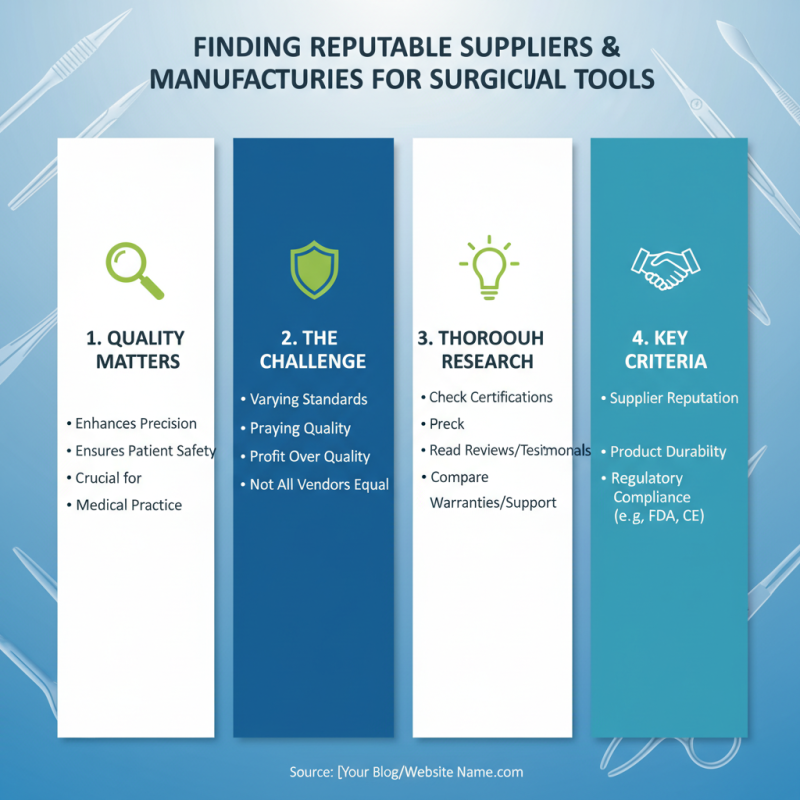
In the ever-evolving field of healthcare, surgical instruments must meet specific standards. Quality is non-negotiable. Practitioners should consider certifications like ISO and CE when sourcing. Failing to do so might result in complications during procedures.
Moreover, many healthcare professionals underestimate the impact of the proper tools. A common mistake is to focus solely on cost, neglecting quality and effectiveness. This can lead to patient safety issues. As the industry embraces new technologies, such as AI, it is vital to adapt. Innovations allow for better navigation and efficient sourcing of surgery instruments, improving overall outcomes.

Understanding the Types of Surgical Instruments Available in the Market
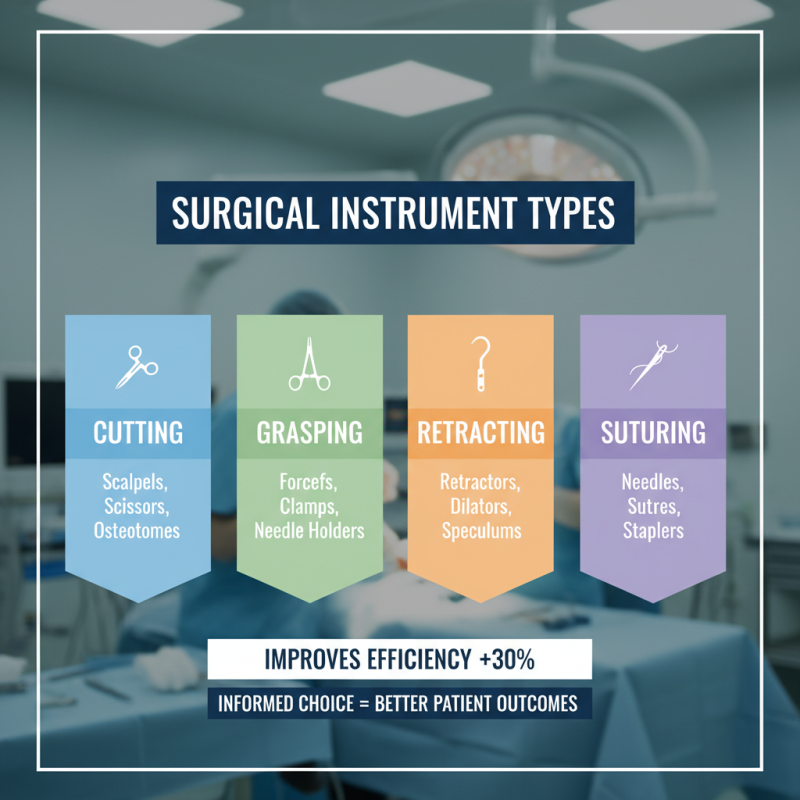
Choosing the right surgical instruments can greatly impact patient outcomes. Understanding the types available on the market is crucial. Broadly, instruments fall into categories like cutting, grasping, retracting, and suturing. According to recent industry studies, proper instrument selection improves surgical efficiency by up to 30%. This highlights the need for informed choices.
When selecting instruments, consider their materials. Stainless steel is popular for durability and sterilization. However, polymer-based instruments are lighter and may reduce hand fatigue. Check the weight and ergonomics; comfort matters during long procedures. Some reports suggest that 20% of surgeons experience discomfort due to poor instrument design.
Tip: Invest time in training staff on instrument usage. Knowledgeable staff can enhance surgical workflow.
Also, assess multifunctional tools. They can save space and costs but may sacrifice precision. Using a multifunction tool in complex surgeries could lead to errors. Lastly, stay updated on trends. The surgical instrument market is evolving with technology, impacting effectiveness. Understanding these trends can help refine your practice. Remember, the right choice today paves the way for better patient care tomorrow.
Assessing the Specific Needs of Your Medical Practice
Choosing the right surgical instruments is crucial for any medical practice. A recent report by the Healthcare Research Institute shows that 70% of surgical errors are linked to improper instrument selection. Therefore, it is essential to assess the specific needs of your practice before making any purchases.
Evaluate the types of surgeries performed in your facility. Are you focusing on minimally invasive procedures, or do you perform more traditional surgeries? Each type demands different tools. For example, laparoscopic surgery requires specialized instruments that are radically different from those used in open surgeries. Also, consider the skills of your staff. If they are not trained on advanced tools, investing in them may not yield the expected outcomes.
Take inventory of your current instruments. Are they outdated or poorly maintained? The same report emphasizes that 30% of surgical complications arise from using worn-out instruments. This suggests that maintaining a high standard of tools is just as important as choosing new ones. Regular assessments and feedback from your surgical team can help in understanding what works and what doesn't. The goal is to create an efficient environment where patient safety and surgical success rates are prioritized.
Evaluating Quality and Durability of Surgical Instruments
When selecting surgical instruments, quality and durability are paramount. Research indicates that up to 25% of surgical errors are linked to instrument failure. Proper assessment of quality ensures that instruments can withstand rigorous use. Look for materials that offer strength and resistance to corrosion. Stainless steel remains a common choice, but advancements in composite materials are emerging.
Durability is often tested through lifecycle evaluations. According to a study by the Association for the Advancement of Medical Instrumentation, over 50% of practices reported instruments failing within their expected lifespan. This reveals the need for careful scrutiny before purchase. Consider the environmental conditions of your practice; high-temperature sterilization can wear down instruments faster than expected.
User feedback is invaluable, yet it can be inconsistent. Some practitioners may have a preference for weight, while others prioritize balance. This disparity leads to subjective decisions that may not align with best practices. A thorough understanding of how instruments perform in various surgical settings can bridge this gap. Regular inspections and maintenance routines are also essential.
Evaluating Quality and Durability of Surgical Instruments
Considering Budget Constraints and Cost-effectiveness
Choosing the right surgical instruments can be challenging. Budget constraints often impact decisions significantly. It's essential to balance quality and cost. High-quality instruments enhance precision and patient safety. However, the price tag can be daunting. Every practice must evaluate its financial capacity carefully.
When exploring options, consider the lifespan of the instruments. Cheaper tools may require frequent replacements, increasing overall costs. Conversely, investing in higher-quality instruments can yield savings in the long run. It's worth pondering whether the cheapest choice truly fits your needs. Reflect on past experiences. Were there moments when a budget choice compromised the procedure? Those considerations are crucial.
Evaluating the necessity of each instrument is vital. You may encounter pressure to stock everything available. However, a focused selection can lead to better efficiency. Think about the most common procedures in your practice. Select tools that are essential for those tasks. It’s not just about giving in to trends. Quality over quantity should be the goal.
How to Choose the Right Surgery Instruments for Your Medical Practice? - Considering Budget Constraints and Cost-effectiveness
| Instrument Type |
Cost Range ($) |
Durability (Years) |
Maintenance Cost ($/Year) |
Cost-effectiveness Rating (1-5) |
| Scalpel |
50 - 150 |
5 |
10 |
4 |
| Forceps |
30 - 120 |
7 |
5 |
5 |
| Scissors |
40 - 200 |
8 |
15 |
3 |
| Needle Holder |
25 - 100 |
6 |
6 |
4 |
| Electrocautery |
200 - 1000 |
10 |
25 |
2 |