


7 Best Orthopedic Implant Plates for Global Buyers?
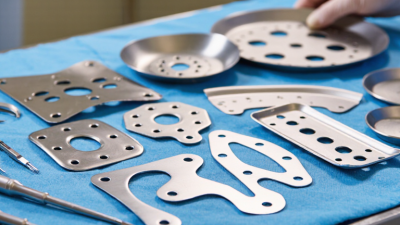
Choosing among the 7 Best Orthopedic Implant Plates for Global Buyers requires more than comparing prices or surface finishes. Orthopedic implants plates must match anatomy, fracture patterns, surgical technique, and local regulatory expectations. A plate that performs well in a high-volume trauma center may not suit a smaller hospital with limited imaging support.
The market is expanding. Grand View Research estimated the global orthopedic implants market at more than USD 48 billion in 2023, with continued growth expected through 2030. MarketsandMarkets also identified trauma fixation as a major segment, supported by aging populations, road injuries, and rising orthopedic procedures. These figures are useful, but market reports use different definitions and forecasting models. They should guide evaluation, not replace clinical evidence.
Safety comes first.
This overview considers plate geometry, titanium or stainless-steel composition, locking mechanisms, fatigue resistance, sterilization compatibility, and supplier traceability. It also considers surgeon experience, distribution reliability, training support, and post-market surveillance. The FDA’s guidance on orthopedic device performance highlights the importance of biocompatibility, mechanical testing, labeling, and risk management. ISO 10993 and ISO 13485 remain important reference points for biological safety and quality systems.
No ranking fits every buyer. That is worth admitting. A cost-efficient system may create hidden expenses through instrument shortages, delayed delivery, or revision surgery. Buyers should verify regulatory registration in the destination market and request current technical files, test summaries, and clinical evidence. The seven options below are therefore practical benchmarks, not universal recommendations.
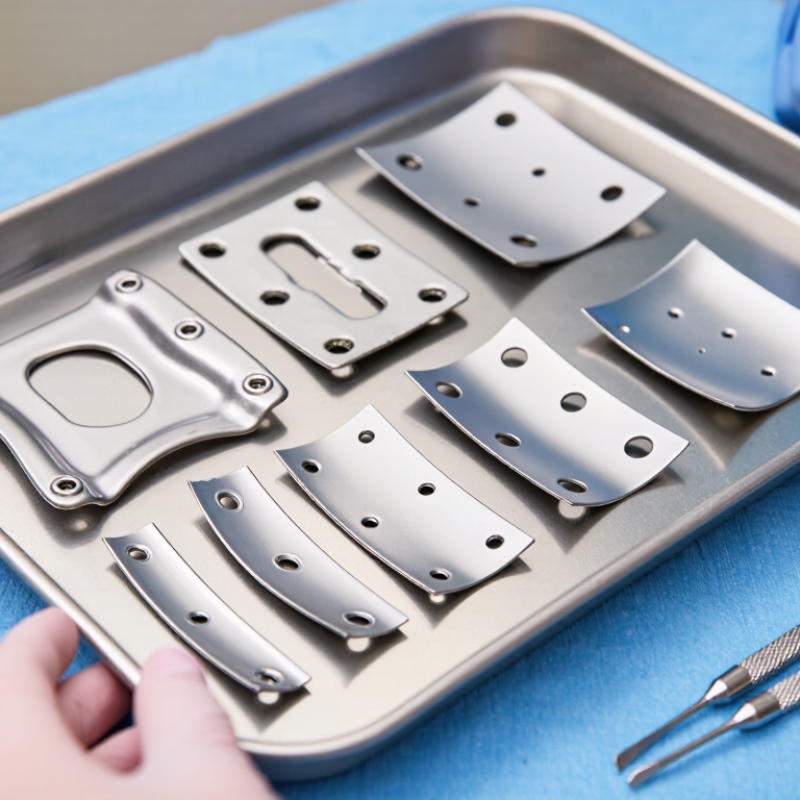
How to Rank Seven Plates: FDA, ISO 10993, and ASTM F382 Benchmarks
Ranking seven orthopedic implant plates requires more than reading tensile strength tables. FDA clearance confirms a device has met a regulatory pathway, not that it is clinically superior. The FDA’s orthopedic implant guidance emphasizes substantial equivalence, material characterization, mechanical testing, and labeling evidence. Therefore, I would record clearance type, intended anatomy, fixation method, and available clinical data for every plate.
Biocompatibility needs equal attention. ISO 10993-1:2018 uses a risk-based framework, considering tissue contact, contact duration, materials, and manufacturing residues. A plate with an ISO 10993 test report is not automatically safer. The biological evaluation must match its real use. Check extractables, corrosion concerns, coatings, and sterilization effects. Small details matter.
ASTM F382 provides a practical mechanical comparison. Its four-point bending method measures bending strength, stiffness, and permanent deformation. These results help separate seven plates under controlled loading. However, laboratory values do not reproduce bone quality, screw purchase, or surgical technique. That limitation is easy to miss. My working score would assign 40% to FDA evidence, 30% to ISO 10993 documentation, and 30% to ASTM F382 results. The weighting is not universal. It should change for anatomy and patient risk. A 2023 FDA guidance review and the current ASTM F382 specification support this evidence-led approach, but neither replaces surgeon judgment or post-market surveillance data. My ranking would still have gaps. That is uncomfortable, but honest.
7 Best Orthopedic Implant Plates for Global Buyers? – How to Rank Seven Plates: FDA, ISO 10993, and ASTM F382 Benchmarks
Reference comparison of generic metallic bone-plate categories. The ranking emphasizes structural-test relevance, biological-evaluation planning, and typical U.S. regulatory documentation readiness; it does not represent certification or approval of any specific product.
| Rank | Generic Plate Category | Typical Anatomical Use | Common Implant Materials | Typical Fixation Concept | ASTM F382 Relevance | ISO 10993 Planning Focus | Typical FDA U.S. Pathway | Evidence Burden | Reference Benchmark Score |
|---|---|---|---|---|---|---|---|---|---|
| 1 | 3.5 mm Locking Compression Plate (LCP) | Diaphyseal and metaphyseal fixation of adult radius, ulna, tibia, humerus, and other long bones. | Titanium alloy such as Ti-6Al-4V or implant-grade stainless steel such as 316L. | Combination of compression holes and threaded locking holes; accepts locking and non-locking screws. | Directly applicable Bench testing commonly addresses bending strength and bending stiffness of the metallic plate construct. |
Chemical characterization and biological endpoints are selected according to patient-contact type and duration; commonly includes cytotoxicity, sensitization, irritation or intracutaneous reactivity, systemic toxicity, and implantation-related assessment where applicable. | Typically evaluated as a Class II metallic bone-fixation appliance through the 510(k) process, subject to the exact device configuration and classification. | High: multiple screw-hole functions, material options, and construct configurations require broader mechanical and risk documentation. | 91 / 100 |
| 2 | Anatomically Contoured Distal Radius Volar Plate | Fracture fixation of the distal radius, especially intra-articular and metaphyseal fracture patterns. | Commonly Ti-6Al-4V or 316L stainless steel. | Low-profile volar plate with fixed-angle or variable-angle distal screw holes and proximal shaft holes. | Generally applicable ASTM F382 bending-strength and stiffness testing can support evaluation of a metallic bone plate, with configuration selection justified by the intended use. |
Long-term or permanent-contact implant assessment normally requires a documented biological-evaluation plan based on material, surface, processing residues, and patient contact. | Typically Class II and commonly supported by a 510(k), with substantial-equivalence analysis and device-specific bench testing. | High: periarticular geometry, distal screw trajectories, low-profile design, and risk of tendon or joint penetration need focused verification. | 88 / 100 |
| 3 | Proximal Humerus Locking Plate | Fixation of proximal humerus fractures, including fractures involving the surgical neck and tuberosities. | Ti-6Al-4V, commercially pure titanium, or 316L stainless steel, depending on the design. | Contoured plate with multiple divergent or convergent locking screws for metaphyseal support. | Generally applicable Metallic plate bending performance may be assessed using ASTM F382 methods, supplemented by construct-specific tests for screw fixation and relevant failure modes. |
Biological evaluation should consider permanent bone contact, manufacturing residues, surface treatment, and any coatings or colorants. | Typically a Class II bone-fixation device considered through 510(k); exact classification depends on the complete system and intended use. | High: complex three-dimensional anatomy and screw trajectory create additional verification and clinical-risk considerations. | 86 / 100 |
| 4 | Distal Fibula/Lateral Malleolus Plate | Fixation of distal fibula and lateral malleolus fractures as part of ankle fracture treatment. | Ti-6Al-4V or 316L stainless steel. | Low-profile lateral plate with locking, non-locking, or combination screw holes. | Generally applicable ASTM F382 is relevant to metallic bone-plate bending strength and stiffness; construct tests may be added for the intended fracture pattern. |
Permanent-contact metallic implant evaluation generally focuses on material characterization and applicable systemic, local, sensitization, irritation, and implantation endpoints. | Typically Class II with a 510(k) submission used when a suitable predicate and intended-use comparison are available. | Moderate to high: smaller dimensions and low-profile geometry require careful fatigue, bending, screw-interface, and soft-tissue risk evaluation. | 83 / 100 |
| 5 | Clavicle Superior Locking Plate | Fixation of midshaft and lateral clavicle fractures. | Ti-6Al-4V or 316L stainless steel. | Anatomically contoured superior plate using locking and non-locking screws; some designs include separate lateral extensions. | Generally applicable ASTM F382 can provide a metallic bone-plate bending benchmark, while clavicle-specific construct loading may be needed to represent intended use. |
Biological evaluation is based on permanent bone contact and the finished device, including cleaning, passivation, anodization, coatings, and sterilization effects where relevant. | Typically Class II and often considered through 510(k), subject to intended-use and technological-characteristics comparison. | Moderate to high: anatomical contour, prominence over the skin, screw pull-out risk, and cyclic loading require targeted verification. | 80 / 100 |
| 6 | Olecranon/Proximal Ulna Plate | Fixation of olecranon and proximal ulna fractures. | Ti-6Al-4V or 316L stainless steel. | Contoured plate with locking and non-locking screw options, often including proximal fragment fixation holes. | Generally applicable ASTM F382 bending testing may be used for the metallic plate, with additional construct testing selected for the fracture and loading environment. |
Permanent-contact biological evaluation should address the finished metallic implant and any surface modifications or processing residues. | Typically treated as a Class II metallic bone-fixation appliance; a 510(k) may be appropriate depending on the final design and predicate strategy. | Moderate: the design is anatomically specific, but the overall plate system is usually less configuration-heavy than a broad periarticular system. | 77 / 100 |
| 7 | Straight Narrow Compression Plate | Simple transverse or short-oblique fractures of selected long-bone diaphyses. | 316L stainless steel or titanium alloy such as Ti-6Al-4V. | Standard compression holes for dynamic compression and neutralization; generally simpler than a locking plate. | Directly applicable ASTM F382 is directly relevant to metallic bone-plate bending strength and bending stiffness, with test configuration matched to plate geometry. |
Material and finished-device biological evaluation remains necessary for permanent bone contact; the test plan may be more straightforward when the device has no coating or novel material. | Typically Class II and potentially suitable for 510(k) review when intended use, materials, and technological characteristics support substantial equivalence. | Moderate: simpler geometry can reduce documentation complexity, although fatigue strength, hole spacing, and plate contour remain important. | 75 / 100 |
Benchmark notes: ASTM F382 addresses metallic bone-plate specification and mechanical test methods, including bending strength and bending stiffness; it is not a substitute for complete device verification. ISO 10993 does not prescribe one universal test panel for every implant: the applicable biological endpoints should be justified through a risk-based biological-evaluation process for the finished device. FDA classification and the need for a 510(k) depend on the exact intended use, materials, design features, and applicable product code. The scores are comparative planning scores only and must not be interpreted as FDA clearance, ISO certification, or ASTM compliance.
Related Posts
-

Top 10 Orthopedic Plates and Screws for Global Buyers?
-
7 Best Orthopedic Implants Businesses for Global Buyers?
-
How to Choose the Right Orthopedic Bone Screws for Your Surgery?
-
2026 How to Choose the Right Orthopedic Surgical Devices for Your Needs?
-

Top Orthopedic Surgical Devices Trends for 2026 What to Know?
-
Why Choose Orthopedic Surgical Plates for Global Buyers?